
A deep dive into the science behind molecular diagnostics for marine aquariums
At dxAquaria, our lab relies on qPCR testing for aquarium pathogens to accurately detect and measure disease-causing organisms in marine systems.
Quantitative polymerase chain reaction, better known as qPCR, has been the gold standard in molecular diagnostics for more than 40 years.
But what exactly is happening inside a qPCR test?
Understanding the science behind the test helps explain why molecular testing for fish disease can detect pathogens with such precision – even before symptoms become obvious in your tank.
qPCR builds upon traditional polymerase chain reaction (PCR) techniques. PCR is designed to amplify tiny amounts of DNA so they can be detected and measured.
A PCR reaction requires several key components:
The reaction cycles through repeated heating and cooling steps.
During each cycle:
Each cycle doubles the amount of DNA present.
Over time, even extremely small amounts of pathogen DNA can be amplified enough to detect.
This is why qPCR diagnostics are so powerful for aquarium pathogen detection.
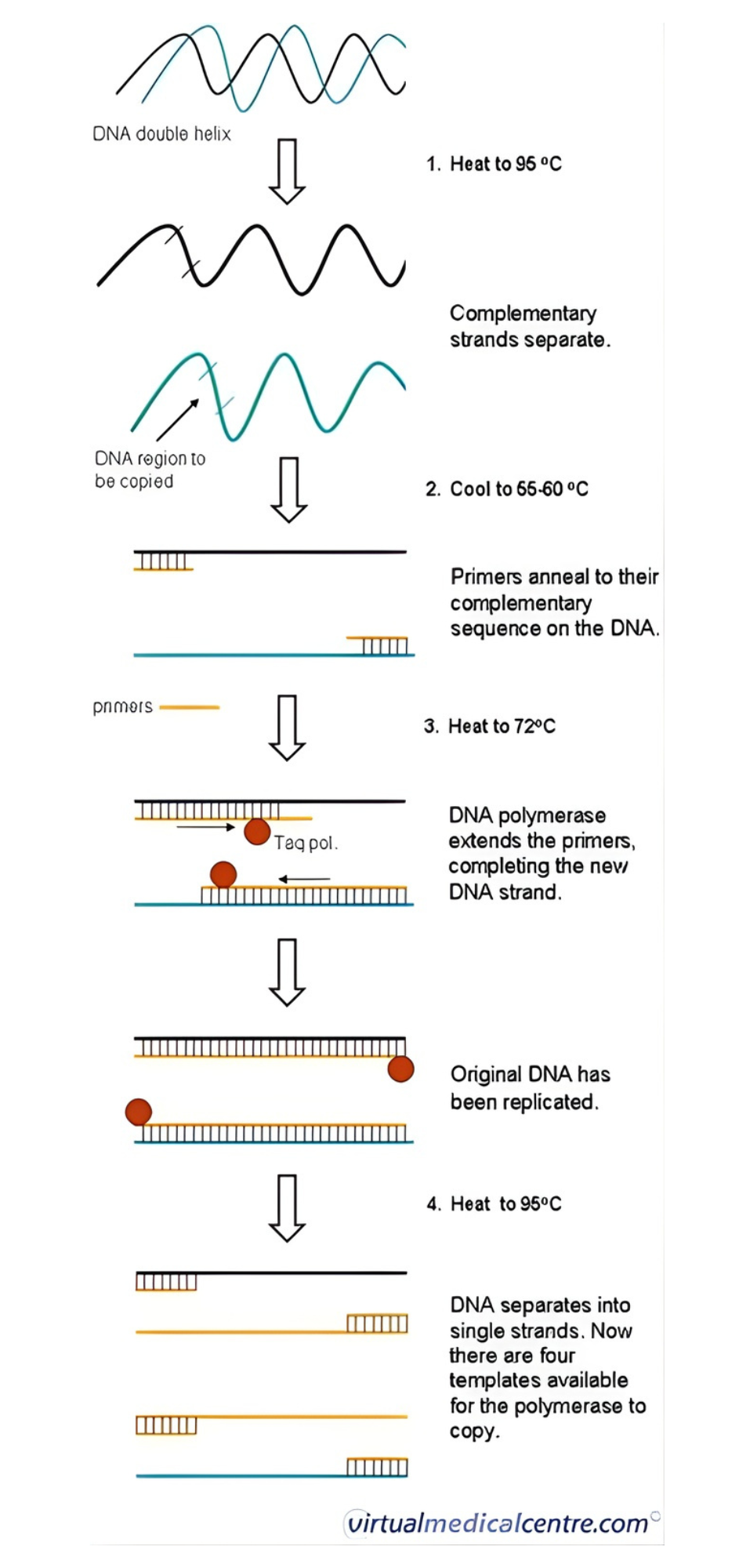
Traditional PCR simply tells you whether DNA is present.
qPCR takes it a step further by measuring how much DNA is present in the sample.
This is done using a special molecule called a hydrolysis probe, which, like the primers, binds to another region of the template DNA between primers.
When the probe is cleaved, it releases a fluorescent signal.
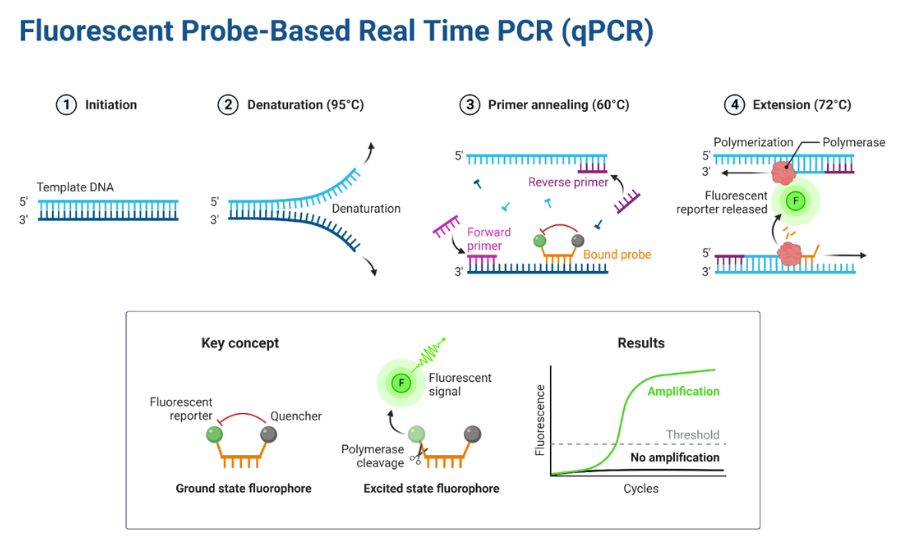
Image courtesy of BioRender.
Probe cleavage leads to higher fluorescence and is directly correlated to the successful amplification of DNA in each PCR cycle. The produced fluorescence is measured and collected at the end of each cycle.
Under properly designed conditions, PCR amplification only occurs if the target DNA is present in the sample.
If no pathogen DNA exists, the reaction produces no signal, resulting in a flat fluorescence curve.
In marine aquarium disease testing, this principle allows us to confidently determine whether a pathogen is present or absent in a water sample.
A rising fluorescence signal indicates amplification, meaning the pathogen’s DNA was detected.
When fluorescence data is plotted against the number of PCR cycles, it produces a PCR amplification curve.
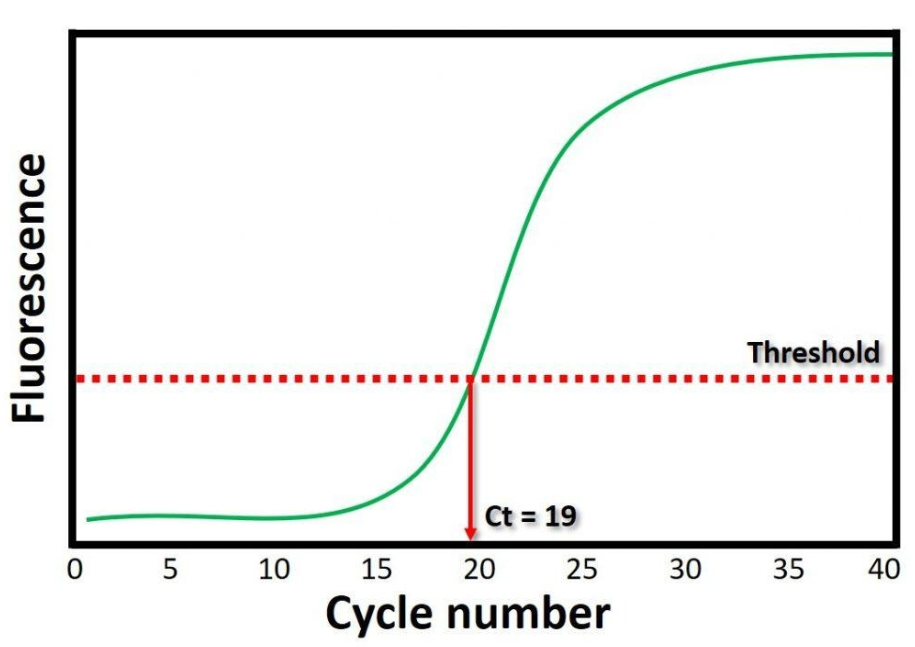
Image courtesy of TopTipBio
To interpret the results, a threshold is set. The cycle number where fluorescence crosses this threshold is called the Ct value (Cycle threshold).
The Ct value provides insight into how much DNA was present in the original sample:
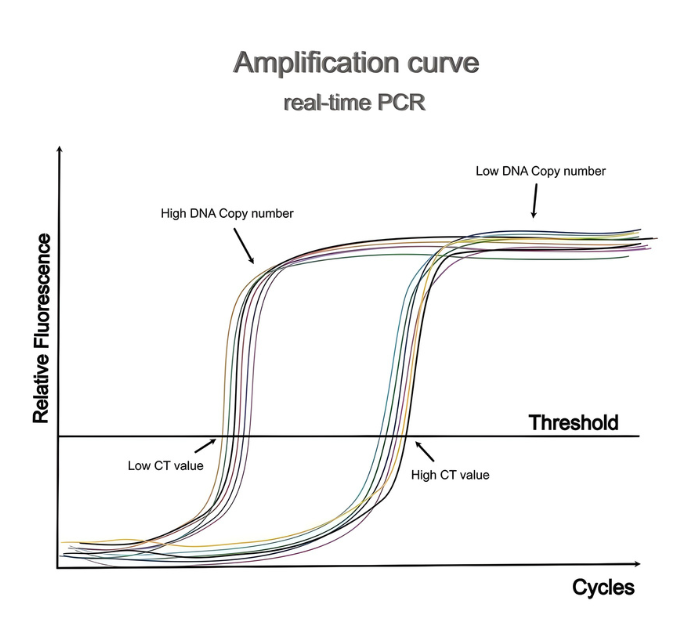
Image Courtesy of The Scientist.
In other words, samples with more pathogen DNA amplify earlier in the process.
This quantitative capability is what makes qPCR testing for aquarium pathogens far more informative than simple presence/absence tests.
To quantify pathogen levels, Ct values are compared against a standard curve created from known DNA concentrations.
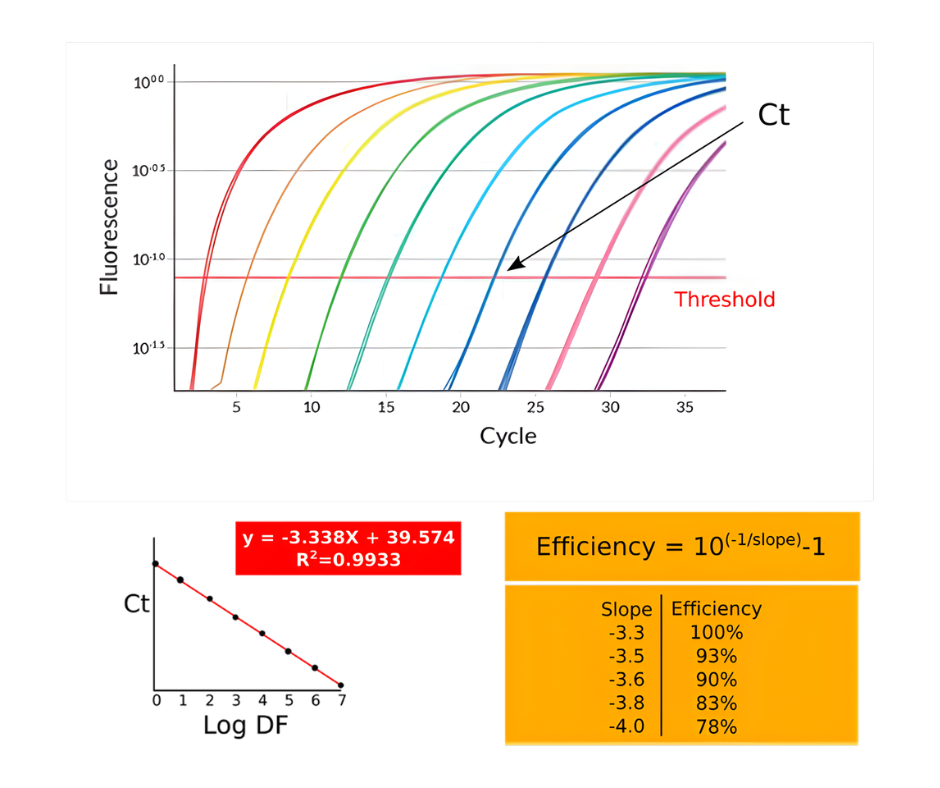
Image courtesy of Labster.
By plotting Ct values from known samples, we can determine the DNA concentration in an unknown sample with high accuracy.
The final result is reported as:
DNA copies per microliter of sample (copies/µL)
This measurement gives aquarists and professionals a clearer picture of pathogen load in their systems.
At dxAquaria, we follow strict laboratory protocols to ensure reliable marine fish health testing.
Every sample undergoes multiple quality checks:
Positive and negative controls
Each run includes known samples to confirm that the test is functioning correctly.
Triplicate testing
Every aquarium sample is tested three separate times to confirm consistent results.
Standard curve calibration
Ct values are converted into pathogen concentrations using validated reference curves.
The final output reported to customers includes both:
This approach allows aquarists to move beyond guesswork and toward data-driven disease management.
Diseases like Marine Ich, Velvet, Uronema, and Lymphocystis Virus can exist in aquarium systems long before fish show visible symptoms.
Using qPCR testing for aquarium pathogens, these organisms can be detected early.
That early detection allows aquarists to:
Because accurate diagnostics lead to better decisions and healthier marine systems.
Learn more about our qPCR Healthscan test at dxAquaria.