
Date: August 2025
System: 1400-gallon mixed marine aquarium
Species: Achilles Tang (Acanthurus achilles)
This case study highlights how molecular diagnostics and microscopy confirmed a complex pathogen outbreak in a large marine aquarium system shortly after the introduction of a new fish.
Within days of introducing an Achilles tang into a 1400-gallon display tank, the fish began showing symptoms consistent with a marine velvet infection, later confirmed through microscopy and qPCR DNA testing. Further analysis revealed a co-infection involving multiple pathogens, demonstrating how rapidly disease can escalate in marine systems without quarantine.
A client introduced a newly purchased Achilles tang into their established 1400-gallon reef system after observing no visible disease symptoms at the aquarium store. Because the fish appeared healthy, the client opted to skip quarantine before adding the fish to the display system.
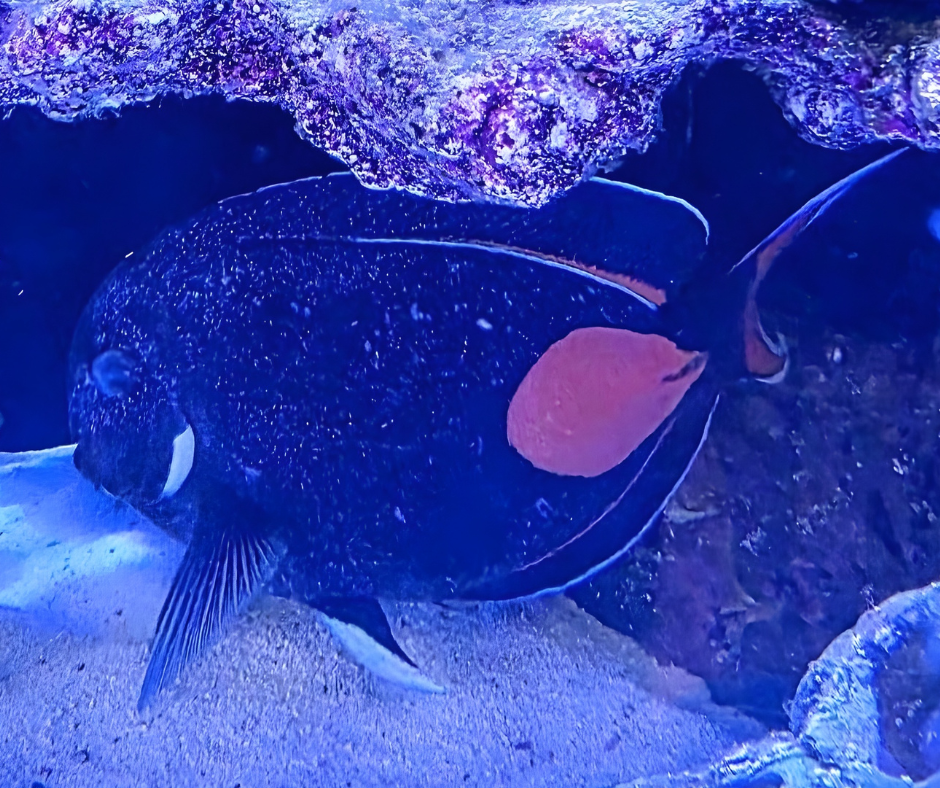
Within 72 hours of introduction, the Achilles tang began exhibiting signs of severe stress including:
Approximately 24 hours later, the fish developed small white spots on its body, along with elevated mucus production.
The client monitored the fish for another day to confirm that the symptoms indicated an active infection while researching possible treatments.
Soon after, the condition progressed.
Both the Achilles tang and a yellow tang in the system began exhibiting disease-related symptoms:
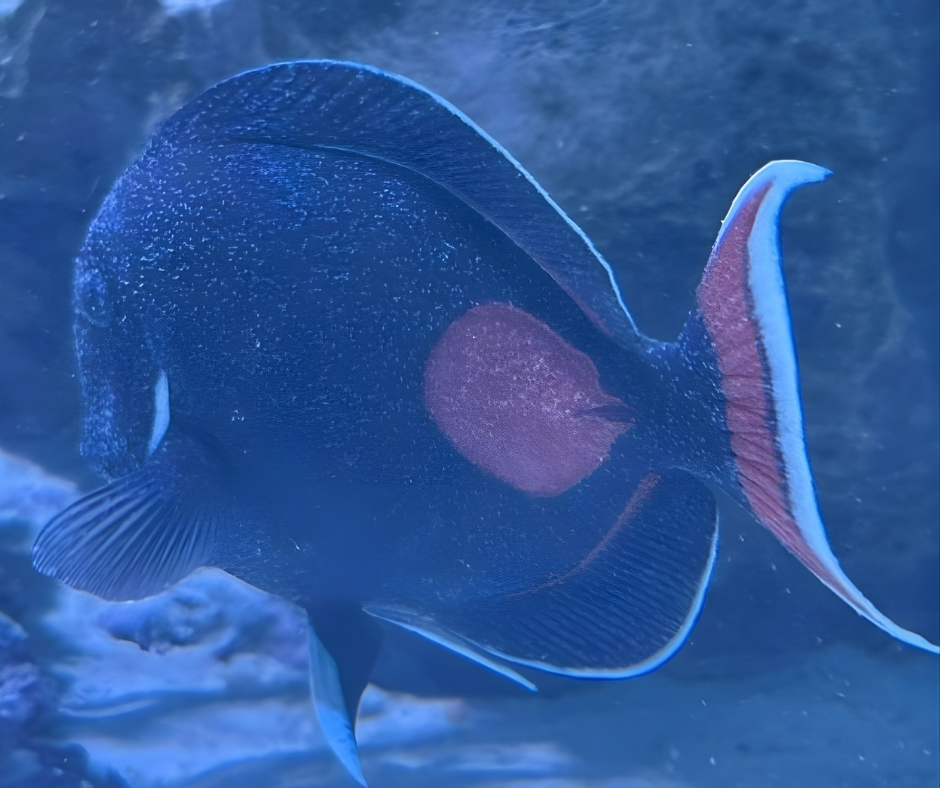
The Achilles tang’s white spots became more numerous and developed into clustered, raised nodules across the body and fins, further suggesting a marine velvet infection.
At this stage, the client removed the affected fish and transferred them to a separate treatment system.
Because the main display tank housed invertebrates, rays, and sharks, species highly sensitive to copper, treatment protocols had to be carefully adapted.
The response included:
Treatment System
Main Display System
These measures were intended to suppress pathogens in the display system while treating infected fish in a controlled environment.
dxAquaria was asked to perform on-site diagnostic testing to identify the exact pathogens involved.
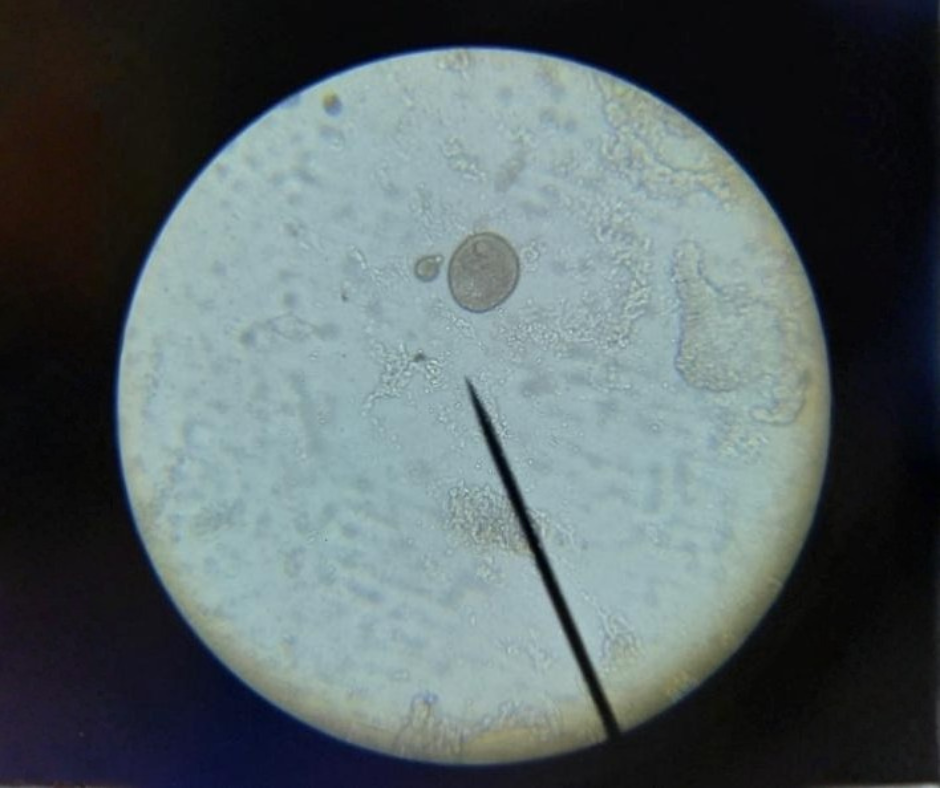
Samples were collected from three sources:
These samples were analyzed using both microscopic examination and molecular DNA diagnostics.
Initial examination under 100× magnification revealed organisms strongly resembling Amyloodinium ocellatum, the parasite responsible for marine velvet infection.
Marine velvet is known for causing:
On microscopic examination, it was determined that most of the microbes seen at 100x magnification resembled Amyloodinium, or marine velvet.
But because the symptoms suggested a more complex infection, further testing was performed at the dxAquaria laboratory.
Back in the lab, DNA extracted from the samples was analyzed using the dxAquaria qPCR pathogen detection panel, designed to detect major marine fish pathogens, including:
The results confirmed clinically significant levels of three pathogens across the system:
The fish swab sample contained pathogen concentrations roughly 100× higher than the water samples, providing the clearest confirmation of infection.
DNA sequencing further verified the identity of all three pathogens, confirming a multi-pathogen outbreak rather than a single marine velvet infection.
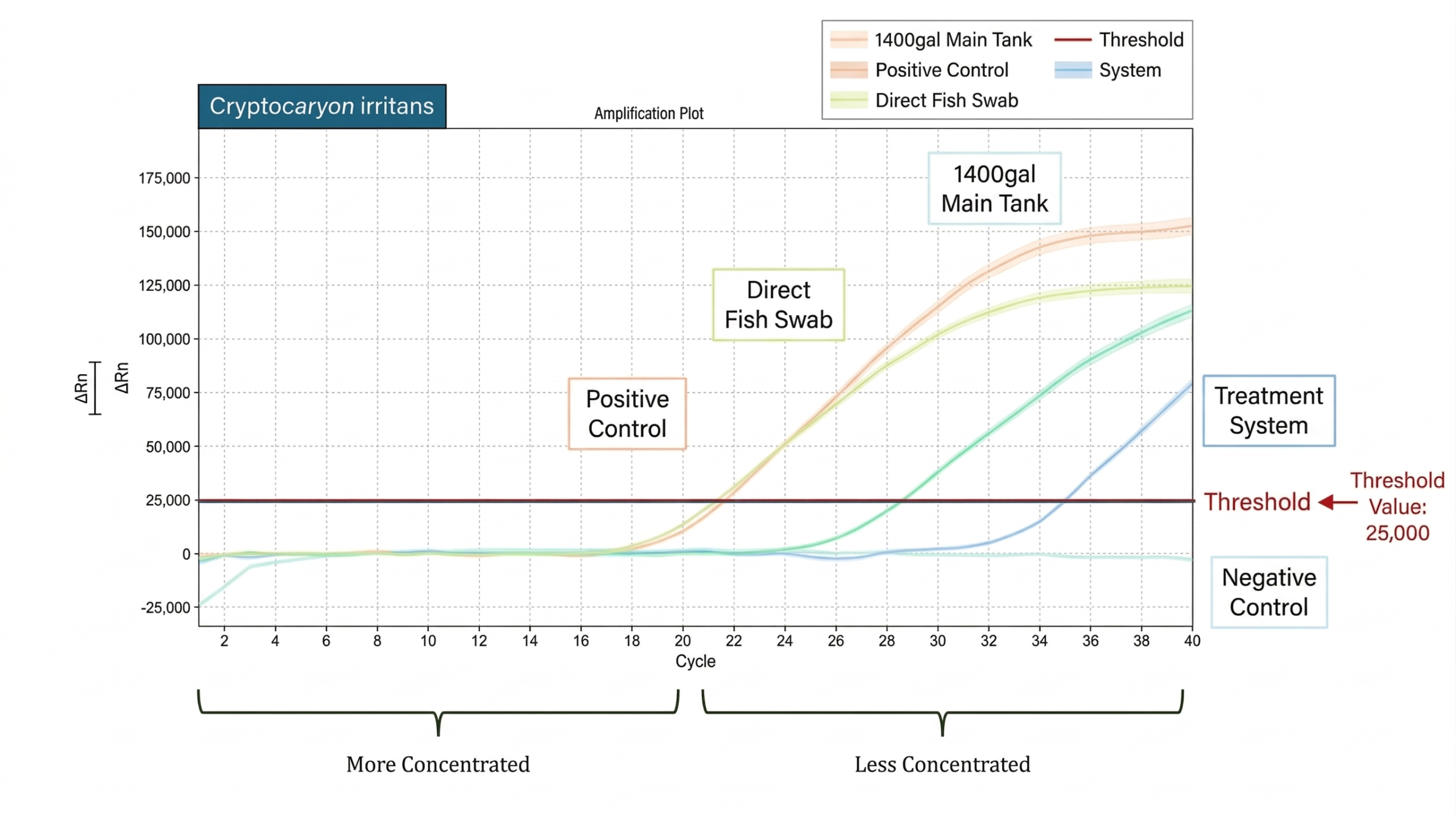
Of the three detected pathogens, cryptocaryon was the highest abundance pathogen detected in every sample. The data above outlines the obtained data for Cryptocaryon Irritans (Marine Ich).
Co-infections are common in marine aquariums.
In this case, the Achilles tang may have carried Cryptocaryon or Amyloodinium prior to introduction, but shipping stress and acclimation to a new environment likely triggered a pathogen bloom.
Stress can suppress immune responses in marine fish, allowing secondary pathogens like Uronema to proliferate rapidly.
While many fish can tolerate low pathogen levels, similar to how humans handle mild viral infections, high-virulence pathogens, such as marine velvet infection, can overwhelm the immune system quickly, making early diagnosis critical.
One key takeaway from this case was the speed and sensitivity of qPCR diagnostics.
Even though the infected fish had been in the treatment system for three hours and exposed to copper, the diagnostic tests still detected meaningful pathogen levels.
Additionally, despite the large volume of the main 1400-gallon aquarium, the test successfully detected Cryptocaryon in the water column, demonstrating the capability of molecular diagnostics to identify pathogens even in diluted environments.
These rapid results allowed the aquarium maintenance team to adjust their treatment strategy quickly, addressing the full scope of the infection rather than treating a single suspected pathogen.
This case underscores several important lessons for marine aquarists and aquarium professionals:
With tools like qPCR testing and rapid pathogen screening, aquarists can detect infections earlier and implement more effective treatment strategies before outbreaks escalate.