
When it comes to managing marine fish disease, one truth stands above all. You can’t treat what you can’t detect.
But not all diagnostic tools are built the same.
At dxAquaria, two primary testing solutions exist, each designed for a different moment in your decision-making process:
activeID Rapid Test → built for speed
HealthScan qPCR Test → built for precision
Understanding when to use each can be the difference between reacting late and staying ahead of diseases.
Think of these tests not as competitors, but as complementary tools in your diagnostic workflow.
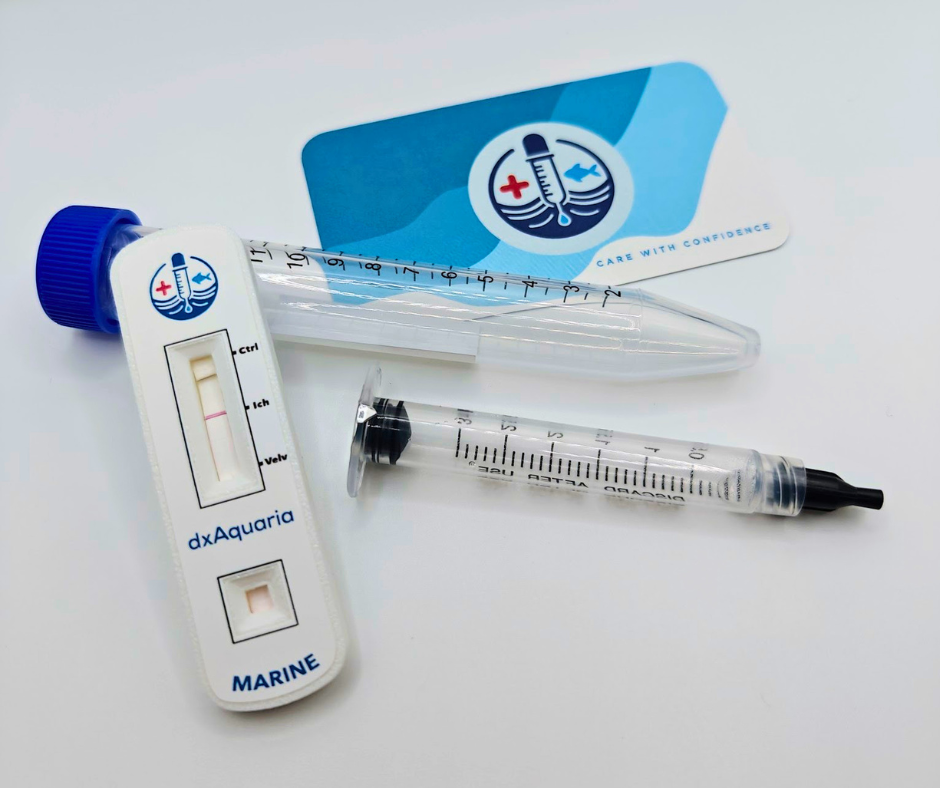
The activeID Rapid Test is designed for one thing above all – getting fast answers.
What it’s best for:
The tradeoff:
Speed comes with a limitation. It’s optimized to detect only when pathogen levels are already significant.
That means, if the infection is just starting (low pathogen load), it may not show up yet.
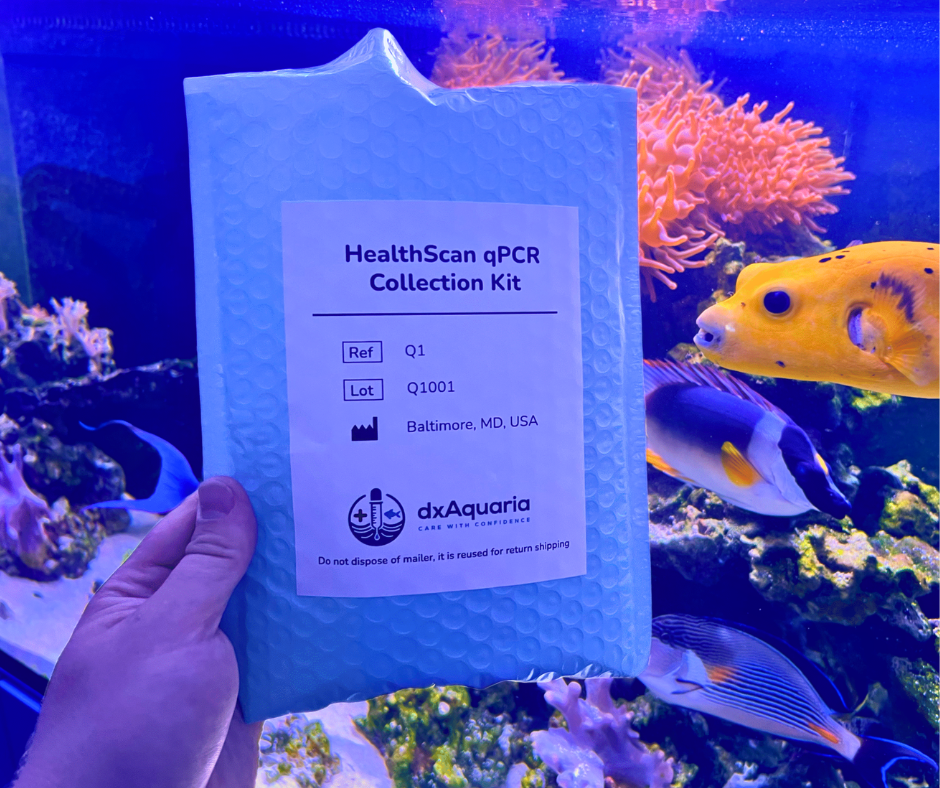
The HealthScan qPCR Test is the gold standard for precision diagnostics.
What it’s best for:
The real advantage:
qPCR testing can detect pathogens at significantly lower concentrations – up to 100x more sensitive than rapid tests.
That means you can identify a problem before it becomes an outbreak.
Here’s the simplest way to think about it:
| Feature | activeID Rapid Test | HealthScan qPCR |
|---|---|---|
| Primary Strength | Speed | Precision |
| Turnaround Time | ~1 hour | 48–72 hours |
| Detection Level | Moderate–high only | Low to high (very sensitive) |
| Output | Yes/No result | Quantitative (how much pathogen) |
| Use Case | Emergency screening | Full system diagnostics |

Most disease outbreaks don’t start overnight.
They begin quietly, with low pathogen levels that build over time.
This is where the distinction becomes critical:
Use activeID if:
Use HealthScan qPCR if:
The most effective disease management strategy isn’t choosing one—it’s using both strategically.
A practical workflow:
This creates a proactive + reactive loop:
Both tests are powerful, but they serve different roles:
activeID Rapid Test = speed, convenience, immediate clarity
HealthScan qPCR = sensitivity, depth, and early detection
If you had to summarize it:
Rapid tests tell you what’s happening now.
qPCR tells you what’s coming next.
Don’t wait for visible symptoms to take action. Start testing now with rapid, on-site detection. Or, go deeper with lab-grade qPCR insights